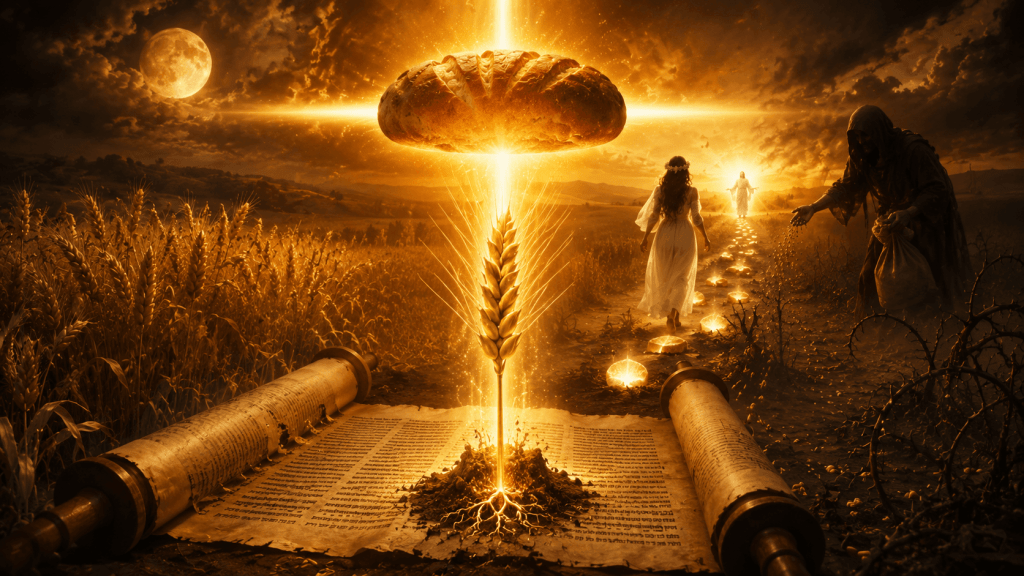
The War Over Bread and the Bride
Torah Portion: Ki Teitzei (Deuteronomy 21:10 – 25:19)
“When you go forth to war against your enemies, and the Lord your God has delivered them into your hands, and you have taken them captive.” (Deuteronomy 21:10)
The opening words of this week’s Torah portion, Ki Teitzei—”When you go forth”—are a continuation of where we left off in the previous portion. The last phrase of Deuteronomy 21:9 is: “When you shall do that which is right in the sight of the Lord.” That is the catalyst. That is what propels us forward into verse 10: “When you go forth to war against your enemies.”
But there is something deeper in the Hebrew that most translations miss. The word for “against” is actually al—which means “over.” So the verse should read: “When you go forth to war over your enemies.”
To be “over” your enemies is vastly different from being “against” them. Being “against” suggests two opponents on the same level, banging heads, fighting toe to toe. But being “over” means you are on higher ground. You have the advantage. The enemy has to climb up to reach you. That is the position of victory.
Where does this advantage come from? From doing that which is right in the sight of the Lord. When you walk in obedience to His Word, when you live according to His instructions, you are positioned “over” your enemies—not fighting against them from the same level, but ruling over them from a place of divine authority.
The War Over Bread
The Hebrew word for war is milchamah. At the heart of that word is lechem—the word for bread. Every war is ultimately over bread. Over land. Over resources. Over the ability to feed and sustain life.
But bread itself comes from a process. A seed is planted in the ground. It dies to itself. It receives water and sunlight. It grows into a stalk of wheat. It matures. It is harvested. It is ground into flour. It is mixed with water, kneaded, and baked. Only then does it become bread—something that sustains life.
Yeshua said in John 12:24: “Unless a grain of wheat falls into the ground and dies, it remains alone; but if it dies, it produces much grain.” He was speaking of Himself, but He was also speaking of us. We are seeds planted in the soil of this world. We must die to ourselves—our selfish desires, our worldly ambitions, our comfort—so that we can grow and produce fruit.
In Luke 8:11, Yeshua explains: “The seed is the Word of God.” The Word of God is the seed. And what grows from that seed is determined by which word we receive. There are two types of seed in the world. There is the good seed of the Word of God, and there are the tares—the counterfeit words sown by the enemy.
Two Seeds, Two Gardens
From the very beginning, there has been a conflict between two seeds. In Genesis 3:15, God declares: “I will put enmity between you and the woman, and between your seed and her Seed.” The seed of the serpent and the Seed of the woman have been at war ever since.
The enemy sows tares—counterfeit words, false teachings, deceptive philosophies. These tares look like wheat, but they produce no bread. They cannot sustain life. They are the words of the god of this world, who has blinded the minds of those who do not believe (2 Corinthians 4:4).
The good seed—the Word of God—produces wheat. And wheat produces bread. And bread sustains life. This is why Yeshua said: “I am the bread of life” (John 6:35). He is the true bread from heaven. He is the Word made flesh. He is the seed that died and produced abundant fruit so that we might live.
The question we must ask ourselves is: Which seed is growing in my garden? What am I feeding on? What am I allowing to take root in my heart?
The War Over the Bride
There is a deeper layer to this portion. The war is not just over bread—it is over a bride. In the ancient world, warriors would go to battle, and among the captives they would find a beautiful woman whom they desired. The Torah gives instructions for this situation. She must be brought home. Her head must be shaved. Her nails cut. She must mourn for her parents for thirty days. Only after that, if the warrior still desires her, may he marry her.
This is a picture of the greater war—the war for the Bride of Messiah. The enemy is also seeking a bride. He desires worship. He desires devotion. He desires to steal, kill, and destroy. And he sows his tares—counterfeit words—to draw people away from the true Bridegroom.
But the true Bridegroom, Yeshua, went to war. He went forth against the enemy. He did what was right in the sight of the Father. He laid down His life. And through His death and resurrection, He conquered sin and death. He emerged victorious. He is the Seed of the woman who crushed the head of the serpent.
And now He is seeking a bride—one who will be faithful, pure, and devoted to Him.
Standing Over, Not Against
The key to victory in this war is to do that which is right in the sight of the Lord. When we walk in obedience—when we keep His commandments, when we meditate on His Word, when we allow His seed to grow in our hearts—we are positioned over our enemies. We are not fighting against them from the same level. We are ruling over them from a place of divine authority.
This is the promise of the Torah: when you walk in obedience, the Lord your God delivers your enemies into your hands. You take them captive. You are over them, not under them. You are the head, not the tail.
This is not about physical warfare. It is about spiritual warfare. It is about the battle for our hearts, our minds, and our families. It is about the war over the seed—the Word of God—and the bread—the life-sustaining truth that comes from it.
Feeding on the Bread of Life
As we approach the Fall Feasts—Yom Teruah, Yom Kippur, and Sukkot—we are called to examine ourselves. What seed are we allowing to grow? What bread are we feeding on? Are we consuming the Word of God, or are we consuming the counterfeit bread of the world?
The enemy offers many kinds of bread—entertainment, pleasure, wealth, fame. But none of it sustains life. Only the true bread from heaven—the Word of God, Yeshua Himself—can nourish our souls and give us victory over the enemy.
The world’s bread is temporary. It satisfies for a moment but leaves us hungry again. The bread from heaven—the Torah, the Word, Yeshua—satisfies eternally.
Conclusion: Go Forth in Victory
Ki Teitzei—”When you go forth.” We are going forth into battle. Every day, we face the war over the seed. Every day, we choose which bread to eat. Every day, we decide whether we will be over our enemies or trapped in the trenches fighting against them.
The choice is ours. But the victory is already won. The Seed of the woman has crushed the head of the serpent. The true Bread from heaven has been given. And we are called to walk in obedience, doing that which is right in the sight of the Lord, so that we may be over our enemies—not fighting against them, but ruling with Him.
As we prepare for the coming season, let us feed on the true bread. Let us allow the Word of God to take root in our hearts. Let us go forth in victory, knowing that the Lord our God has delivered our enemies into our hands.
“I am the bread of life. Whoever comes to Me shall never hunger, and whoever believes in Me shall never thirst.” (John 6:35)
May you go forth in victory, standing over your enemies, feeding on the true bread from heaven.


Leave a Reply