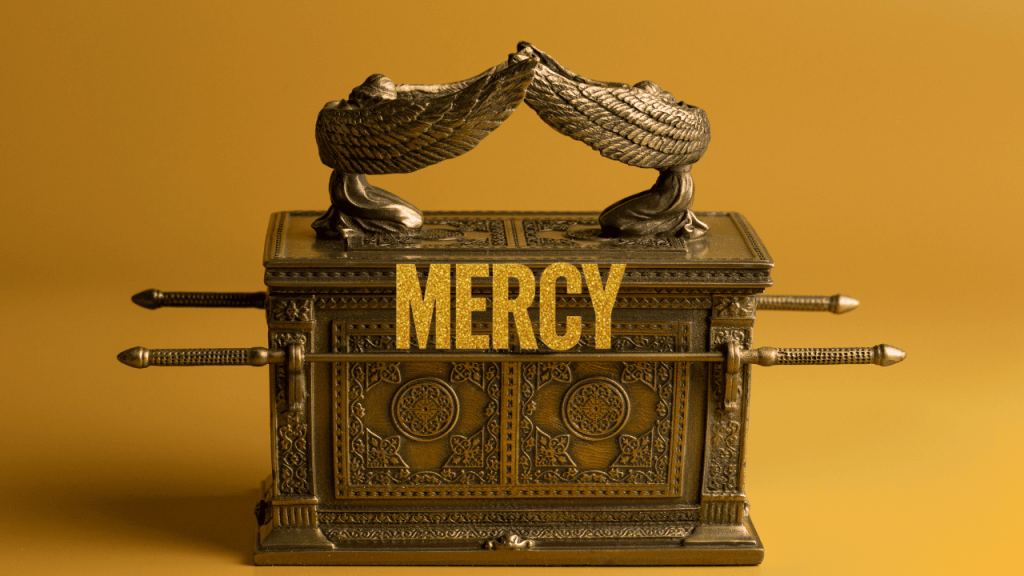
The Meeting Place, Not the Place of Wrath
“God presented Him as the mercy seat through faith in His blood.” (Romans 3:25, TLV)
There are a handful of verses that people treat as the final word. Someone opens their Bible, points to a passage, and declares that this single verse ends all debate. At the top of that list is Romans 3:25.
If you wanted to prove that Jesus died as a sacrifice to satisfy the anger of God, this is the verse you would reach for. It looks like the smoking gun. The cross, according to this reading, is where divine wrath was finally poured out on an innocent victim so that justice could be satisfied and forgiveness could become legally possible.
But is that what Paul actually wrote? Depending on which Bible you read, the translation varies widely. The Christian Standard Bible says “sacrifice of atonement.” The New Living Translation says “sacrifice for sin.” The King James Version says “propitiation” — appeasement, an offering made to turn away the anger of a god. But the Greek word behind all these translations is hilasterion. And its meaning is far richer — and far different — than most people realize.
Hilasterion: Where Heaven Meets Earth
When the Hebrew Scriptures were translated into Greek two or three centuries before Paul, the translators needed a word for a specific object: the gold cover that sat on top of the Ark of the Covenant. In Hebrew, it is called the kapporet. The Greek word they chose was hilasterion.
Twenty-one times that word appears in the Greek translation of the first five books of Moses. Every single time, it means the same thing: the mercy seat. The pure gold cover in the most sacred room on earth. Two cherubim on top, wings stretched toward each other, faces downward.
And what did God say about this place? In Exodus 25:22: *”There I will meet with you, and I will speak with you from above the *kapporet, from between the two cherubim.”
The mercy seat is an address. That is the location — of all the square footage in God’s creation, He brings His presence to that one spot. This seat, where heaven and earth come together, is a meeting point. Nothing is killed on the mercy seat. The altar, where animals are slaughtered, is outside in the courtyard. The mercy seat is deep inside, past the veil.
Once a year, on Yom Kippur, the high priest carries blood that was shed somewhere else — he brings it into the room and sprinkles it on the mercy seat. The blood on the mercy seat was never punishment. It cleanses. It carries life into the presence of God, so that the meeting can happen at all.
So when Paul writes that God presented Jesus as a hilasterion by His blood, he is not pointing to the place where the victim dies. He is pointing past the veil, to the room where the blood arrives — and where God meets His people.
The Imperial Monument: A Public Declaration of Mercy
But there is a problem. Paul is writing to believers in Rome. Most of them are Gentiles. Most have never set foot in the Temple in Jerusalem. Would they have understood “mercy seat”? Probably not.
So why did Paul use this word? Because hilasterion had a second meaning — one that any Roman would recognize instantly.
In the Greek and Roman world, hilasterion meant a monument — a public marker set up to declare that peace had been made. Archaeologists have found stones with inscriptions using this word, hailing Caesars.
Consider this example: After Caesar was murdered and Rome fell into civil war, Octavian emerged victorious and became Caesar Augustus. The city of Metropolis had backed the wrong side — Antony. When Augustus became the most powerful man on earth, the people of Metropolis were terrified. He should have treated them as traitors.
What did he do instead? Augustus forgave them. In gratitude, the people built a hilasterion to Augustus. It was not a payment to buy anything back. It was a public marker thanking him for mercy. Peace was declared.
So when Paul says God displayed Jesus as a hilasterion on the cross, He is the embodied declaration that God Himself has acted to reconcile and cleanse. The sovereign Himself raises the monument. He does not wait for us to do it. He provides it Himself.
Two Meanings, One Truth
A Jewish believer in Rome might hear the first meaning: the mercy seat, where God meets His people. A Gentile believer might hear the second meaning: the imperial monument, declaring that peace has been made.
Which one did Paul mean? Scholars debate this. But do we have to choose? Both are beautiful. Both are true.
In both meanings, the same thing is clear: God took the forward action. There is no appeasement. No victim offered up to cool divine wrath. There is mercy — mercy from the throne, mercy that comes down first. God designed the mercy seat. God raised the monument. God set forth His Son as the meeting place, the sign of pardon.
The whole idea of penal substitution assumes that God needed to be pacified before He could love. But here, the opposite is true. God does not wait for a payment. He acts first. The peace comes down from the throne, not up from the victim.
The Servant Who Stands in the Gap
This connects directly to Isaiah 53. The Hebrew word paga appears there, meaning “to meet, to intercede.” In verse 6, “the iniquity of us all met on Him.” In verse 12, “He made intercession for the transgressors.”
The same word opens and closes the chapter. Isaiah tells you what the meeting place is: not wrath poured out, but intercession — the servant standing between God and the people. The mercy seat had no voice. The stone monument had no voice. But the servant has a voice, and He speaks mercy.
Jesus is that servant. He is the meeting place. He is the sign of pardon. He is the hilasterion.
Not the Smoking Gun
Penal substitutionary atonement appeals to Romans 3:25 as a strong proof text. But if Paul had wanted to describe a sacrificial victim absorbing God’s wrath, he could have chosen other Greek words — words that existed for that purpose. He did not use them. He used hilasterion — the mercy seat, the monument of mercy.
So this verse is not the smoking gun that ends the debate. It opens a much more beautiful story.
Whether Jew or Gentile, the message is the same: God has made a way. You can meet Him. Not because someone appeased His anger, but because He chose mercy and made it public.
God set forth Yeshua as the hilasterion — the meeting place where heaven touches earth, where the guilty are received, where peace is declared. Not wrath. Not punishment. Mercy.
“For God so loved the world that He gave His only Son, that whoever believes in Him should not perish but have eternal life.” (John 3:16)
May you meet Him at the mercy seat, where heaven and earth come together.
 Light In Torah
Leave a comment