Four Traits to Govern Every Step Forward to God’s Destiny for Your Life
Torah Portion: Bamidbar (Numbers 1:1 – 4:20)
“The children of Israel shall pitch their tents, every man by his own camp, and every man by his own standard, throughout their hosts.” (Numbers 1:52)
The sun is setting. The light and darkness are mixing. This is erev — the twilight hour when vision blurs and the path becomes less certain. In Scripture, erev is never good. It is a mixture, a blending of opposites, a time when clarity fades. But as the sun continues its descent, something remarkable happens. The darkness deepens — and yet, for those who have prepared, the light shines brighter.
We are standing on the threshold of the final nine days before Shavuot. The 41st day of counting the Omer is behind us. Tomorrow, day 42 begins the seventh and final week. Pentecost is approaching — a week from this coming Sunday. And with it comes the promise of a personal Jubilee: debts released, slaves set free, property returned to its original owner.
But this Jubilee is not automatic. It is contingent. It depends on how you have been counting the Omer. Have you merely been marking days — reciting a number each evening without heart engagement? Or have you been examining your life, searching the Scriptures, learning, growing, and seeking the Father?
If the latter, hold on to your bootstraps. Something is coming your direction.
The question is: How do we move forward when the camp breaks camp? How do we navigate the transitions, the journeys, the wilderness wanderings that lead us toward God’s destiny for our lives?
The answer is found in the order of the march. The tribes of Israel did not move randomly. They moved in a divinely appointed sequence — a sequence that reveals four essential traits that must govern every step of our spiritual journey.
The Order of the March: Wisdom, Humility, Strength, Wealth
The camp of Israel was arranged around the tabernacle — four great camps, each with a lead tribe, each with a distinct character. When the cloud lifted and the camp prepared to move, the tribes did not break rank randomly. They moved in a specific, unchanging order.
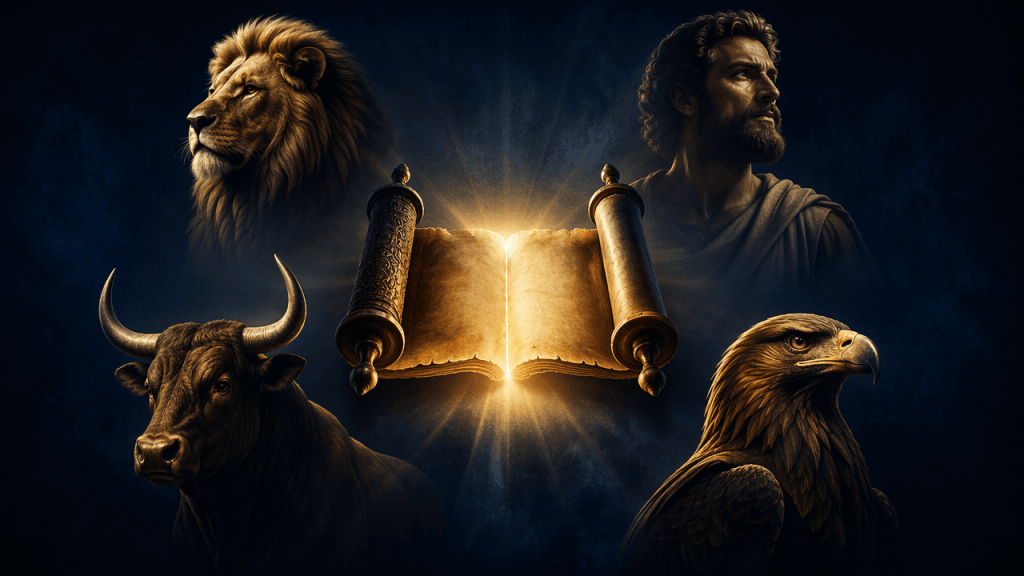
First to move was the camp of Judah — to the east, the direction of the rising sun. Judah leads with the banner of the lion. Judah represents wisdom — chokhmah. Wisdom is the first light, the divine insight that illuminates the path ahead.
Second to move was the camp of Reuben — to the south. Reuben represents humility. He was the firstborn who lost his birthright through sin, yet he was also the one who sought to rescue Joseph and reunite the family. Failure had humbled him. And that humility became his strength.
Third to move was the camp of Ephraim — to the west. Ephraim represents strength — gevurah. Not merely physical brawn, but the internal fortitude to overcome weakness, to discipline the spirit, to fight the battles that rage within and without.
Fourth to move was the camp of Dan — to the north. Dan represents wealth — not merely financial abundance, but the deep contentment that allows a person to be at peace in any circumstance. Wealth of spirit. Wealth of perspective. Wealth of gratitude.
These four traits — wisdom, humility, strength, and wealth — are not random qualities. They are the governing principles of every forward step toward God’s destiny for your life. And they must be maintained in proper order.
Wisdom must go first. Then humility. Then strength. Then wealth.
If wealth goes first, you become a slave to mammon. If strength goes first, you become a brute. If humility goes first without wisdom, you become a doormat. But when wisdom leads, and humility follows, and strength rises from that humble posture, and wealth flows as a byproduct — then you are positioned for the destiny God has prepared for you.
Wisdom: The First Light
The camp of Judah led the march. Judah’s name means “praise,” and from Judah came the lion — the symbol of kingship, courage, and messianic promise. Yeshua is the Lion of the tribe of Judah. Wisdom is His gift.
The beginning of wisdom is the fear of the Lord (Proverbs 9:10). Wisdom is not merely intelligence or accumulated knowledge. It is the divine insight that comes from walking in reverent relationship with the Holy One. It is the ability to see what others cannot see, to discern the path when the way seems hidden, to receive first light before the sun has risen.
Proverbs 4:18 declares: “The path of the just is as a shining light, that shines more and more unto the perfect day.” Wisdom does not stand still. It grows. It brightens. It leads.
Before you take any significant step in your life — before you change jobs, move to a new city, enter a relationship, start a ministry, or make any major decision — you must first seek wisdom. Not the wisdom of the world, which is foolishness to God. But the wisdom from above, which is first pure, then peaceable, gentle, willing to yield, full of mercy and good fruits (James 3:17).
Without wisdom going first, your journey will be marked by stumbling. But when wisdom leads, the path becomes clear.
Humility: The Posture of Receiving
After Judah comes Reuben. Reuben is a study in contrasts. He was the firstborn son of Jacob, yet he lost his birthright because he defiled his father’s bed (Genesis 35:22). On the surface, Reuben seems a failure. But the fuller picture reveals something else.
It was Reuben who saved Joseph’s life. When his brothers plotted to kill the young dreamer, Reuben intervened: “Shed no blood, but cast him into this pit” (Genesis 37:22). He intended to rescue Joseph and return him to his father. Reuben had failed in one area, but he had grown through that failure. He had been humbled. And that humility made him useful.
The teacher in this portion notes: “I’ve found in my personal life that whenever you have a failure of any sort, it humbles you. It definitely humbles you. And when you’re humbled, life doesn’t carry with it the proud moments of sticking out your chest and making your tail feathers like a peacock go all over the place to show your bright boldness. Humility has a way of keeping you from elevating yourself to places that you probably shouldn’t be.”
Knowledge puffs up, but love edifies (1 Corinthians 8:1). Love is humility in action. Love is putting others first. Love is recognizing that every insight, every gift, every ability comes from the Holy One and is not a reason for pride but for gratitude.
Wisdom without humility becomes arrogance. But wisdom received in humility becomes transformation.
Strength: The Warrior Within
After humility comes strength — the camp of Ephraim. Ephraim was the younger son of Joseph, yet he received the greater blessing (Genesis 48). His banner was the ox — a symbol of power, service, and sacrifice.
Strength in this context is not merely physical. It is gevurah — the internal power to overcome weakness, to discipline the flesh, to say no to temptation, to stand firm in the face of opposition. It is the quality of the warrior who does not flee from battle but engages it with courage.
The teacher says: “The strength is actually found in your ability to overcome the areas in your life that are weak, that are faulty areas. With wisdom, you get insights. With those insights that you get to guide you on your journey, walking with humility, then you are able to implement the strength — the internal strength, as well as the external strength.”
Solomon warned that a man who cannot control his own spirit is like a city with broken walls — defenseless against every attack (Proverbs 25:28). But the one who cultivates inner strength — through discipline, through prayer, through the study of the Word, through reliance on the Spirit — becomes a fortified city. The enemy may rage, but the walls hold.
Strength without wisdom is brute force. Strength without humility becomes tyranny. But strength that flows from wisdom and humility is the power of God working through a yielded vessel.
Wealth: The Contentment That Multiplies
Finally comes Dan — the camp of the north. Dan’s name means “judge,” and his territory was the northernmost, the first to face attack, the sentinel on the wall. Dan represents wealth.
But what kind of wealth? The teacher points to Philippians 4:11, the favorite verse of his father of blessed memory: “Not that I speak in respect of want: for I have learned, in whatsoever state I am, to be content.”
The apostle Paul was not speaking about geographical states — Michigan, Texas, Colorado. He was speaking about internal states. Whether on the mountaintop or in the valley. Whether scraping the bottom of the ship or sailing with the wind. He had learned to be content.
This is true wealth. Not the accumulation of possessions, but the deep, unshakable peace that comes from knowing that the Holy One is your provider, your protector, and your portion. The wealthy person is not the one with the most money. The wealthy person is the one who needs the least.
“Godliness with contentment is great gain,” Paul wrote to Timothy (1 Timothy 6:6). “For we brought nothing into this world, and it is certain we can carry nothing out.”
When wisdom, humility, and strength have done their work, wealth follows naturally — not necessarily financial wealth, but the wealth of a life well lived, a soul at rest, a heart fully satisfied in God. And that wealth enables generosity. It enables giving. It enables the funding of the kingdom.
But wealth must come fourth. If it comes first, it becomes an idol. If it comes second or third, it distorts the order. Only when wisdom leads, humility follows, strength rises, and wealth comes as a byproduct — only then is the believer positioned for the destiny God has prepared.
The Tabernacle at the Center: Godliness as the Focus
Throughout the march, one thing never changes: the tabernacle is at the center. Whether the camp is settled or moving, the presence of the Holy One is the focal point. The Levites carry the sacred vessels. The cloud leads the way. The fire provides light in the darkness.
The teacher emphasizes: “The key is always keep godliness in the center of your focus. Always keep godliness. That’s important. And as I keep godliness, the tabernacle, holiness, God’s presence, I’m surrounding all of that.”
Wisdom, humility, strength, and wealth are not ends in themselves. They are means. They are the traits that enable you to keep godliness at the center. They are the disciplines that clear the path so that the presence of the Holy One can lead.
When the camp is settled, all tents face inward — toward the tabernacle. When the camp moves, the tabernacle goes first. The Holy One does not follow His people. He leads them. And as they follow — in the order of wisdom, humility, strength, and wealth — they move toward their destiny.
Practical Application: Ordering Your Steps
As you enter this Shabbat — the eve of the final week of counting the Omer — consider the order of your own steps.
1. Is wisdom leading? Are you seeking the fear of the Lord as the beginning of wisdom? Are you spending time in the Word, asking the Holy One for insight and direction? Or are you charging ahead based on your own understanding?
2. Is humility following? When you receive wisdom, do you receive it with pride or with gratitude? Do you recognize that every good gift comes from above? Do you walk in love, putting others before yourself?
3. Is strength rising from within? Are you disciplining your spirit? Are you overcoming the areas of weakness that have held you back? Are you fighting the good fight of faith, not in your own power, but in the strength that God supplies?
4. Is wealth flowing as a byproduct? Are you content in whatever state you find yourself? Do you trust the Holy One to provide for your needs? Are you generous with what you have been given?
5. Is godliness at the center? Is the presence of the Holy One the focal point of your life? Do your tent flaps face inward toward the tabernacle? When you move, does He lead?
Conclusion: The Shabbat Rest Before the Final Week
Tonight is Erev Shabbat — the twilight hour when light and darkness mix. But for those who have been counting the Omer with intention, the darkness does not overcome. The light shines brighter as the world grows darker.
One week remains. Nine days until Shavuot. Seven days until the final week of counting is complete. The Jubilee is approaching — your personal Jubilee, the day of release, the day when debts are canceled, slaves are freed, and property returns to its original owner.
But the Jubilee is not magic. It is the culmination of a journey. And that journey requires order. It requires wisdom first, then humility, then strength, then wealth — with godliness at the center, leading the way.
As you rest on this Shabbat, reflect on the order of your steps. Have you been moving according to the divine sequence? Or have you been rushing ahead, falling behind, or wandering off course?
There is still time to realign. The camp is not yet at its destination. The cloud still leads. And the Holy One is calling you — not to chaos, but to order; not to confusion, but to clarity; not to aimless wandering, but to a destiny governed by wisdom, humility, strength, and wealth.
Shabbat Shalom.
“Trust in the Lord with all your heart, and lean not on your own understanding; in all your ways acknowledge Him, and He shall direct your paths.” (Proverbs 3:5-6)
May wisdom lead, humility follow, strength rise, and wealth flow, as you journey toward your destiny.


Leave a Reply