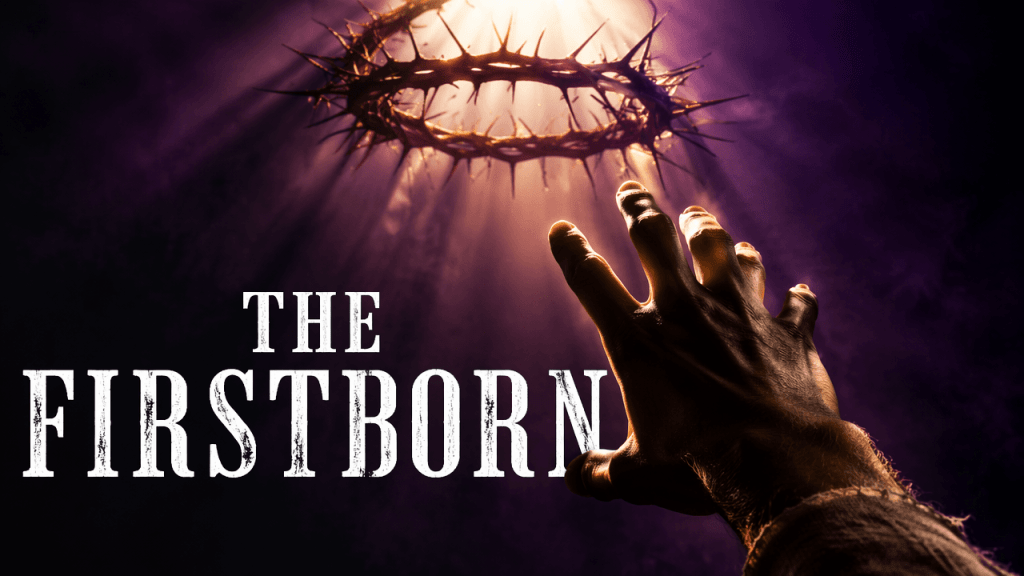
It’s Not a Title — It’s a Prophetic Lifestyle
Torah Portion: Bamidbar (Numbers 1:1 – 4:20)
“Behold, I have taken the Levites from among the children of Israel instead of every firstborn who opens the womb among the children of Israel. Therefore, the Levites shall be Mine.” (Numbers 3:12)
There is a moment in every believer’s journey when the question shifts from “What am I called?” to “Will I live out my calling?” The first question is about identity. The second is about faithfulness. The first is a gift. The second is a choice.
The book of Numbers opens with a census. Every male from twenty years old and upward is counted for war. But one tribe is conspicuously absent from this military roll: the Levites. They are not numbered among the warriors. They are not assigned to the four camps surrounding the tabernacle. Instead, they are placed closest to the sanctuary itself — a cushion of holiness between the Holy One and the rest of the nation.
Why? What made the Levites different? And what does their calling teach us about our own?
The answer takes us back to a moment of crisis — a golden calf, a shattered covenant, and a choice that would echo through eternity. The Levites were not born into their position. They earned it through an act of radical allegiance. They stood against the idolatry of the crowd when everyone else bowed. And because they did, the Holy One said: “The Levites shall be Mine.”
This is not a story about a tribe. It is a story about a lifestyle. It is the story of what it truly means to be a firstborn son of God.
The Five Firstborn Sons of Scripture
Throughout Scripture, the term “firstborn son” is applied to five distinct entities. Each one is called to the same purpose: to rule and reign in God’s kingdom, to have dominion, to be placed in a position of authority over the affairs of heaven and earth.
1. Adam — In Luke 3:38, Adam is called the “son of God.” He was created to have dominion over the earth (Genesis 1:26-28). He was the firstborn, placed in the garden to rule. But he fell, and his position was lost.
2. The Angels — Job 38:7 speaks of the “morning stars” singing together and the “sons of God” shouting for joy at creation. The angelic realm was given authority, but Lucifer and his cohorts rebelled. They failed in their calling.
3. Israel — In Exodus 4:22, the Holy One declares: “Israel is My son, My firstborn.” The nation was delivered from Egypt, brought through the sea, and given the Torah. They were called to be a kingdom of priests, a holy nation. But at Sinai, while Moses was on the mountain receiving the covenant, they built a golden calf. They failed in their calling.
4. Yeshua — He is the only begotten Son, the firstborn over all creation (Colossians 1:15). He alone fulfilled the calling perfectly. He did not fail. He conquered sin, death, and the grave. He is the pattern to which all other firstborn sons are conformed.
5. The Believer — Romans 8:14 declares: “For as many as are led by the Spirit of God, these are sons of God.” We are not born into this calling. We are adopted — placed as sons through the Spirit of adoption. And we are called to walk in the same faithfulness as the Levites, standing against the golden calves of our age.
The firstborn is not a title you receive at birth. It is a lifestyle you choose every day. It is the refusal to bow. It is the willingness to stand when everyone else sits. It is the courage to say, “I am on the Lord’s side,” even when it costs you everything.
The Golden Calf: The Moment of Decision
To understand the Levites, we must return to Exodus 32. Moses has been on Mount Sinai for forty days and forty nights. The people grow restless. They gather around Aaron and demand: “Make us gods who shall go before us. As for this Moses, we do not know what has become of him” (Exodus 32:1).
Aaron collects their gold, fashions it into a calf, and builds an altar before it. The people proclaim: “This is your god, O Israel, who brought you up out of the land of Egypt!” They rise early the next day, offer burnt offerings, bring peace offerings, and sit down to eat and drink. Then they rise up to play — a Hebrew word that implies revelry, dancing, and sexual immorality.
The Holy One tells Moses what is happening below. Moses descends the mountain, sees the calf and the dancing, and his anger burns hot. He throws the tablets of the testimony from his hands, shattering them at the foot of the mountain. He destroys the calf, grinds it to powder, scatters it on the water, and makes the children of Israel drink it.
Then Moses stands at the gate of the camp and calls out: “Who is on the Lord’s side? Come to me!” (Exodus 32:26).
And the Levites — every single one of them — step forward.
While the rest of the nation bowed to the calf, the Levites stood with Moses. While the rest demanded a substitute for the absent leader, the Levites remained loyal to the unseen God. And because of that, they were given a charge: “Each man put his sword on his side, go in and out from gate to gate throughout the camp, and kill every man his brother, every man his companion, and every man his neighbor.”
The Levites obeyed. Three thousand men fell that day. The Levites had proven that their honor for God was greater than their fear of men.
The Exchange: Levites Instead of Firstborn
Now, in Numbers 3, the Holy One explains the consequence of that moment. He says to Moses: “Behold, I have taken the Levites from among the children of Israel instead of every firstborn who opens the womb among the children of Israel. Therefore the Levites shall be Mine” (Numbers 3:12).
The entire nation of Israel was called to be God’s firstborn. Every family was expected to consecrate their firstborn son to the Lord. But after the golden calf, a substitution was made. The Levites — the tribe that stood faithful — took the place of the firstborn.
This is not a rejection of Israel. It is a revelation of how the calling of the firstborn operates. The firstborn is not determined by birth order alone. It is determined by faithfulness. Those who stand with God when others bow are the ones who are placed closest to His presence.
This is why the Levites encamp immediately around the tabernacle. They are the cushion of holiness between the Holy One and the camp. They are responsible for teaching the difference between clean and unclean, between holy and common (Leviticus 10:10). They do not go to war in the same way as the other tribes — they are not counted in the military census of Numbers 1 — because their warfare is different. Their warfare is the maintenance of the sanctuary, the guarding of the sacred, the ministry of reconciliation.
And this is the calling of every believer who chooses to stand against the golden calves of their own generation.
The Spirit of Adoption: Groaning for Placement
The Apostle Paul, writing to the Romans, picks up this theme of firstborn sonship. He declares: “For as many as are led by the Spirit of God, these are sons of God” (Romans 8:14).
Notice the distinction. He does not say that everyone who believes is automatically a son in the full sense. He says that those who are led by the Spirit — those who follow, obey, and walk in the Spirit’s guidance — are sons.
Then he introduces a critical concept: the Spirit of adoption. The Greek word is huiothesia, which means “placement of sons.” It is not adoption in the modern sense of an orphan being taken into a family. It is a legal act in which a mature son is formally placed into a position of authority as an heir.
Paul writes: “For you did not receive the spirit of bondage again to fear, but you received the Spirit of adoption by whom we cry out, ‘Abba, Father.’ The Spirit Himself bears witness with our spirit that we are children of God, and if children, then heirs — heirs of God and joint heirs with Christ, if indeed we suffer with Him, that we may also be glorified together” (Romans 8:15-17).
Children are born. Sons are placed. Children receive an inheritance. Sons manage it. Children are loved. Sons are entrusted with responsibility.
Paul continues: “For I consider that the sufferings of this present time are not worthy to be compared with the glory which shall be revealed in us. For the earnest expectation of the creation eagerly waits for the revealing of the sons of God” (Romans 8:18-19).
The creation is not waiting for more children. It is waiting for the manifestation — the unveiling, the public display — of the sons of God. It is waiting for the firstborn to step into their calling.
But this manifestation has not yet happened. Paul says that we who have the firstfruits of the Spirit — the down payment, the guarantee — are ourselves groaning within ourselves, “eagerly waiting for the adoption, the redemption of our body” (Romans 8:23).
The adoption — the huiothesia, the placement of sons — will take place at the resurrection, when our bodies are redeemed and we are fully conformed to the image of God’s Son. Until that day, we live in hope. “For we were saved in this hope, but hope that is seen is not hope; for why does one still hope for what he sees? But if we hope for what we do not see, we eagerly wait for it with perseverance” (Romans 8:24-25).
The Levite Lifestyle: Standing Against the Golden Calf
What does this mean for us, on the 41st day of counting the Omer?
It means that the calling of the firstborn is not automatic. It is not guaranteed by birth, by denomination, by a prayer prayed decades ago, or by a title on a business card. It is secured by a lifestyle of faithfulness — by refusing to bow when the crowd bows, by standing with Moses when everyone else demands a golden calf.
The golden calves of our age are not made of melted jewelry. They are made of comfort, convenience, cultural acceptance, political power, entertainment, and the fear of man. They are the substitutes we create when the presence of God seems delayed. They are the idols we build when we grow impatient for Moses to return.
Every day, we are faced with a choice: will we bow, or will we stand? Will we demand a god we can see, or will we trust the God we cannot see? Will we blend in with the revelry, or will we step forward and say, “Who is on the Lord’s side? I am”?
The Levites were not born into their position. They earned it through a single, costly act of allegiance. And because of that act, they were placed closest to the tabernacle. They were given the privilege of ministering in the presence of the Holy One. They were entrusted with the sacred task of teaching others the difference between holy and common, clean and unclean.
This is the prophetic lifestyle of the firstborn. It is not a title you wear. It is a life you live.
Practical Application: Making Your Calling Sure
On this 41st day of the Omer, consider these questions:
1. Have you stood against the golden calf? Where in your life are you tempted to bow to the idols of your culture — the idols of comfort, approval, security, or entertainment? Are you willing to stand alone if necessary?
2. Are you being led by the Spirit? The Spirit of adoption leads. He does not follow. He does not suggest. He leads. Are you following where He leads, even when the path is uncomfortable or unpopular?
3. Do you groan for adoption? Do you long for the redemption of your body? Do you ache for the day when you will be placed as a son, not just a child, but a mature, responsible, ruling heir in the Kingdom? Or have you become too comfortable in this present age?
4. Are you willing to be close to the tabernacle? The Levites encamped closest to the sanctuary. That proximity came with responsibility — the responsibility to guard the holy, to teach the Word, to minister to the unclean. Are you willing to be close to God, even if it means serving others in their mess?
5. Do you want the title or the office? Do you want to be called a son, or do you want to live as one? Do you want the banner of the firstborn flying over your house, or do you want to actually do the work of the firstborn?
Conclusion: The Firstborn Among Many Brethren
Paul writes that the goal of our calling is that Yeshua might be “the firstborn among many brethren” (Romans 8:29). He is not the only firstborn. He is the first among many. He is the pattern, the pioneer, the perfect example. And we are called to be conformed to His image — to walk as He walked, to obey as He obeyed, to stand as He stood.
Yeshua did not bow to the golden calf. He did not worship the idols of His day — not the religious hypocrisy of the Pharisees, not the political power of Rome, not the comfort of a quiet life. He stood. He obeyed. He went to the cross. And because of that, He was exalted as the firstborn from the dead (Colossians 1:18).
The same path is set before us. We will face golden calves. We will be tempted to bow. We will be pressured to compromise. But if we stand — if we choose the Levite’s portion — we will be placed close to the tabernacle. We will be counted among the firstborn. We will reign with Him in the age to come.
The firstborn is not a title. It is a prophetic lifestyle. It is the willingness to say, when everyone else is dancing around the calf: “I am on the Lord’s side. Come what may, I stand with Him.”
Shalom.
“But you are a chosen generation, a royal priesthood, a holy nation, His own special people, that you may proclaim the praises of Him who called you out of darkness into His marvelous light.” (1 Peter 2:9)
May you stand when others bow, and may you be counted among the firstborn.


Leave a Reply