Lessons from Shemini in the Counting of the Omer
There are moments in Scripture that stop us in our tracks. The Torah portion Shemini — meaning “eighth” (Leviticus 9:1 – 11:47) — contains one of those moments. On the very day that the Tabernacle is consecrated, the glory of Adonai descends, fire blazes from heaven to consume the offering, and the people erupt in worship. Then, without warning, two of Aaron’s sons, Nadav and Avihu, offer “strange fire” before the Lord. Fire goes out from the presence of God and consumes them. They die on the spot.
What happened? How could two men who had just seen God on Mount Sinai — who had eaten and drunk in His presence — make such a catastrophic error? And what does this have to do with us as we count the Omer, walking from Passover to Shavuot?
This week, we sit with the uncomfortable yet essential truth that zeal without obedience is dangerous. But we also discover something breathtaking: even in judgment, God’s mercy is present. Nadav and Avihu were drawn near to the Holy One, and He was sanctified in them. This is the mystery of Shemini — a new beginning that calls us to examine not just our passion, but its source.
The Eighth Day: A New Dimension
Shemini begins where last week’s portion ended. After seven days of ordination, Aaron and his sons have been set apart. Now, on the eighth day, they begin to minister. In Hebrew thought, seven represents the natural order — creation, completion, the cycle of this world. But eight transcends nature. Eight is new beginnings. It is the number of the covenant (brit milah on the eighth day), resurrection (Yeshua rose on the eighth day), and the dimension beyond.
Right now, we are in the middle of counting the Omer. Each day, we move from the barley harvest at First Fruits to the wheat harvest at Shavuot (Pentecost). We count seven weeks of seven days, and on the fiftieth day — the eighth week’s culmination — we arrive at a spiritual jubilee. During these 49 days, tradition teaches that we work on midot — character traits. Humility, patience, discipline, and most critically at the start: overcoming fear. Fear of what people think. Fear of rejection. Fear of stepping into what God has called us to do.
Shemini is the launching point. It says: “You have been prepared. Now step forward. But step forward exactly as I have commanded.”
The Mystery of Aaron: Calling Higher Than Failure
Before we examine the strange fire, we must pause over Aaron. This is the same Aaron who, at the golden calf, collected gold from the people and fashioned an idol. The same Aaron who, according to Deuteronomy 9, so angered the Holy One that only Moses’ intercession saved him. Yet here, in Shemini, Aaron is consecrated as the High Priest. He is not rejected. He is not demoted. He is elevated.
Why?
Because God’s calling on your life is higher than your failures.
This is not a license to sin. It is an invitation to repentance and restoration. The Holy One does not hold our past against us when we turn back to Him. Instead, He says, “I have called you. I have set you apart. Now walk in that calling.” If Aaron could be restored after the golden calf, then there is hope for every one of us. As we count the Omer, we are invited to let go of the shame of yesterday and embrace the new beginning of today.
But there is a warning attached. The same God who restores also searches hearts. And that brings us to Nadav and Avihu.
Strange Fire: Doing What God Did Not Command
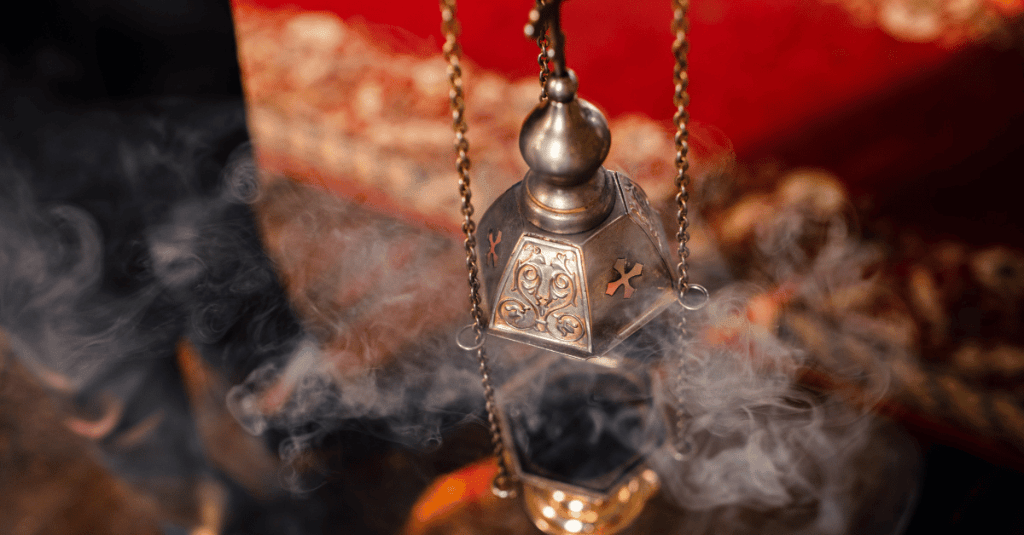
“And Nadav and Avihu, the sons of Aaron, each took his censer and put fire in it, and laid incense on it, and offered strange fire before the Lord, which He had not commanded them. And fire went out from the Lord and devoured them, and they died before the Lord.” (Leviticus 10:1-2)
The text is stark. The key phrase is: “which He had not commanded them.” Their sin was not offering false gods. It was offering true worship in a way God never asked for. They loved the Holy One. They were zealous. They wanted to draw near. But they did so on their own terms.
How often do we do the same? We create traditions, programs, and expressions of worship that feel right to us. We say, “But my heart is pure.” Yet the Holy One says, “To obey is better than sacrifice” (1 Samuel 15:22). Zeal without submission to God’s actual commands becomes strange fire.
Isaiah 50:11 warns: “Behold, all you who kindle a fire, who surround yourselves with sparks — walk in the light of your fire and the sparks you have kindled. From My hand you shall have this: you shall lie down in torment.” When we light our own matches in spiritual darkness, we will end up in sorrow.
Nadav and Avihu had seen God on Mount Sinai (Exodus 24). They ate and drank in His presence. But having tasted His glory, they rushed in where angels fear to tread — not in obedience, but in presumption.
Two Schools of Thought: Sin or Sacrifice?
Jewish tradition offers two interpretations of what happened to Nadav and Avihu.
One view: They were guilty of willful sin. They were drunk (the very next command forbids priests from drinking before ministering). They acted arrogantly, without consulting Moses or Aaron. Their death was judgment.
The other view: They were consumed as a korban olah — a burnt offering. In their zeal to draw near, they became completely given over to God. Their bodies were consumed, but their priestly garments (representing their righteous character) remained untouched, just as Shadrach, Meshach, and Abednego emerged from the fiery furnace without the smell of smoke. In this view, God sanctified Himself in those who drew near, accepting them wholly.
Which view is correct? Perhaps the deeper question is not about Nadav and Avihu, but about us. When we approach the Holy One, do we come on His terms or our own? Do we seek intimacy through obedience or through self-directed passion?
The Priestly Mandate: Knowing the Difference
Immediately after this tragedy, the Holy One speaks to Aaron. The command is striking:
“Do not drink wine or strong drink, you nor your sons with you, when you go into the tabernacle of meeting, lest you die. It shall be a statute forever throughout your generations, that you may distinguish between holy and common, between unclean and clean, and that you may teach the children of Israel all the statutes which the Lord has spoken to them by the hand of Moses. ” (Leviticus 10:9-11)
This is the core of the priesthood: to know and to teach the difference. In our day, the body of Messiah is called a “royal priesthood” (1 Peter 2:9). That means we are responsible for learning what God calls holy versus common, clean versus unclean. We have, too often, reversed these categories. We call Shabbat “just another day” — making the holy common. We elevate human traditions to the level of divine command — making the common holy. We blur the lines between clean and unclean, forgetting that God’s design is not to restrict us but to teach us how to live in His presence.
Being tamei (ritually unclean) is not a sin. It is a state of fragmentation, often from contact with death, birth, or bodily emissions. And the remedy is not punishment — it is time alone with the Holy One until evening. He does not push us away when we are unclean. He invites us closer for cleansing.
Aaron’s Wisdom: When Moses Was Content
One of the most overlooked moments in Shemini comes after the deaths. Moses becomes angry with Eleazar and Ithamar, Aaron’s remaining sons, because they did not eat the sin offering as commanded. Moses says, “Why have you not eaten the sin offering in the holy place?”
Aaron answers: “This day they have offered their sin offering and their burnt offering before the Lord, and such things have befallen me. If I had eaten the sin offering today, would it have been accepted in the sight of the Lord?” (Leviticus 10:19)
Moses hears this — and he is content.
What happened? Moses saw the letter of the law. Aaron saw the weightier matter. His sons had just been taken as a burnt offering. How could he eat a sin offering on the same day that God had accepted a burnt offering of his own flesh and blood? Aaron discerned that the circumstance required a higher application of God’s heart.
This is not a license to disregard commands. It is an invitation to wisdom. The same Spirit who wrote the Word also illuminates how to apply it in the complex, painful moments of life. Aaron did not rebel. He reasoned from within the framework of the commandments. And Moses agreed.
Clean and Unclean: What We Consume Shapes Us
The second half of Shemini (Leviticus 11) gives the laws of clean and unclean animals. The Holy One does not give reasons — He gives commands. But we can discern His wisdom. Clean animals (those that both chew the cud and have split hooves) reflect a spiritual nature: they “chew” on God’s Word (internal meditation) and walk in distinct, separated steps (external action). Unclean animals — like the pig, which has a split hoof but does not chew the cud — represent a divided nature: looking right on the outside but lacking inward transformation.
When we eat, we are not merely consuming nutrients. We are taking in the spiritual nature of that creature. The Holy One cares about what goes into our bodies because He cares about what comes out of our souls. As we count the Omer, preparing our hearts to receive the Torah anew at Shavuot, we are called to be intentional about every form of consumption — food, media, conversation, and thought.
The Counting of the Omer: Overcoming Fear and Walking in Boldness
We are currently walking from First Fruits to Shavuot. Each day is an opportunity to rectify one midah. The first area the Holy One often works on is fear — specifically, the fear of man. The apostle Paul asked for prayer “that utterance may be given to me, that I may open my mouth boldly to make known the mystery of the gospel” (Ephesians 6:19). He understood that boldness is not natural. It must be given.
Shemini is a new beginning. It says: You have been set apart. Now step into your calling. Do not be paralyzed by past failures. Do not be silenced by the fear of rejection. But step forward only in the fire that comes from My presence — not the strange fire of your own making.
Conclusion: Becoming a Living Offering
The Apostle Paul writes: “I beseech you therefore, brethren, by the mercies of God, that you present your bodies as a living sacrifice, holy and acceptable to God, which is your reasonable service” (Romans 12:1). Nadav and Avihu were consumed as a burnt offering in a single moment. We are called to be living offerings — consumed daily, not by strange fire, but by the fire of His Word, His Spirit, and His commands.
As we count the Omer, let us ask:
- What “strange fire” have I brought into God’s presence — activities, traditions, or passions He never commanded?
- Where have I called holy what God calls common, or common what God calls holy?
- Am I willing to let the Holy One cleanse me when I am fragmented, rather than hiding from Him?
- Is my zeal matched by obedience? Is my passion rooted in His Word?
Shemini is the eighth day. It is a new beginning. Let us step into it with boldness — but with boldness that trembles before His commands, loves His instructions, and draws near to Him exactly as He has asked.
“And you shall be holy to Me, for I the Lord am holy, and have separated you from the peoples, that you should be Mine.” (Leviticus 20:26)
— Counting the Omer, day by day, until we stand again at Sinai.
 Light In Torah
Leave a comment